
How HVAC Systems Influence Your Cat’s Respiratory Health
If you share your home with a cat, you already know how attuned these animals are to their environment.
They stretch out in patches of sunlight, seek out the warmest corners, and notice every subtle change in their surroundings.
What many pet owners do not realize, however, is that one of the most significant environmental factors affecting a cat’s health is completely invisible: the air circulating through your home’s HVAC system.
Cats spend the vast majority of their lives indoors, breathing the same recycled air that flows through your heating and cooling ducts every single day.
Unlike humans who go outside, commute, and move through various environments, indoor cats are almost entirely dependent on the air quality within your four walls.
That makes your HVAC system far more than a convenience appliance; for your cat, it is a central pillar of respiratory health.
Understanding how your heating, ventilation, and air conditioning system interacts with your cat’s lungs can help you make smarter decisions as a pet owner, and potentially prevent a range of uncomfortable or even serious health conditions.
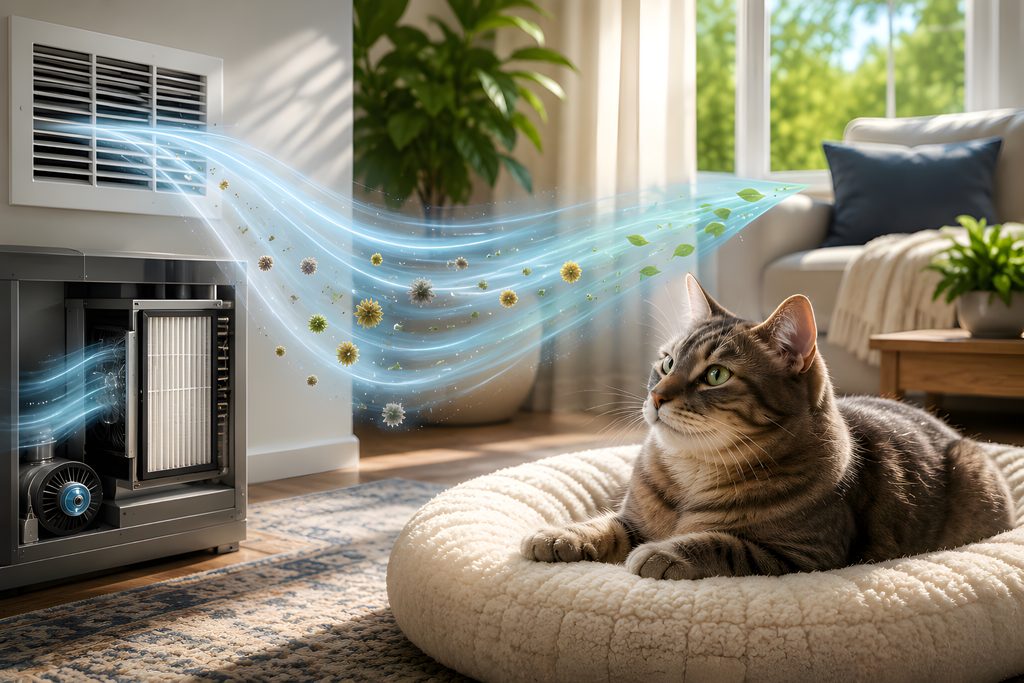
HVAC Systems Influence Your Cat
What’s Actually in the Air Your Cat Breathes?
Before diving into how your HVAC system can help or harm your cat, it helps to understand what indoor air actually contains. Most people assume that staying indoors protects against air pollution, but indoor air can actually be two to five times more polluted than outdoor air, according to the Environmental Protection Agency.
Inside a typical home, the air carries a cocktail of particles and compounds. Dust mites, mold spores, pet dander (yes, cats can be allergic to their own dander or that of other pets), pollen that drifts in through open windows, volatile organic compounds from cleaning products and furniture, and bacteria all float through the air invisibly.
Your HVAC system circulates this air continuously, pulling it through return vents, pushing it through ducts, and releasing it back into your living spaces. If the system is functioning well with clean filters and well-maintained components, it can significantly reduce many of these particles. If it is neglected, however, it becomes a vehicle for distributing pollutants throughout every room in your home.
Cats are particularly vulnerable to airborne irritants for a few key reasons. Their respiratory tracts are proportionally smaller than a human’s, meaning they can reach an irritation threshold more quickly when exposed to the same concentration of particles. They also breathe faster, taking in more air relative to their body size. Additionally, cats spend much of their time low to the ground, near floors where dust and particles tend to settle, and they groom themselves constantly, ingesting whatever lands on their fur.
Common Respiratory Problems Linked to Indoor Air Quality
When indoor air quality is poor, cats are among the first to show symptoms. Recognizing what these symptoms look like can help you connect the dots between your HVAC system and your cat’s health.
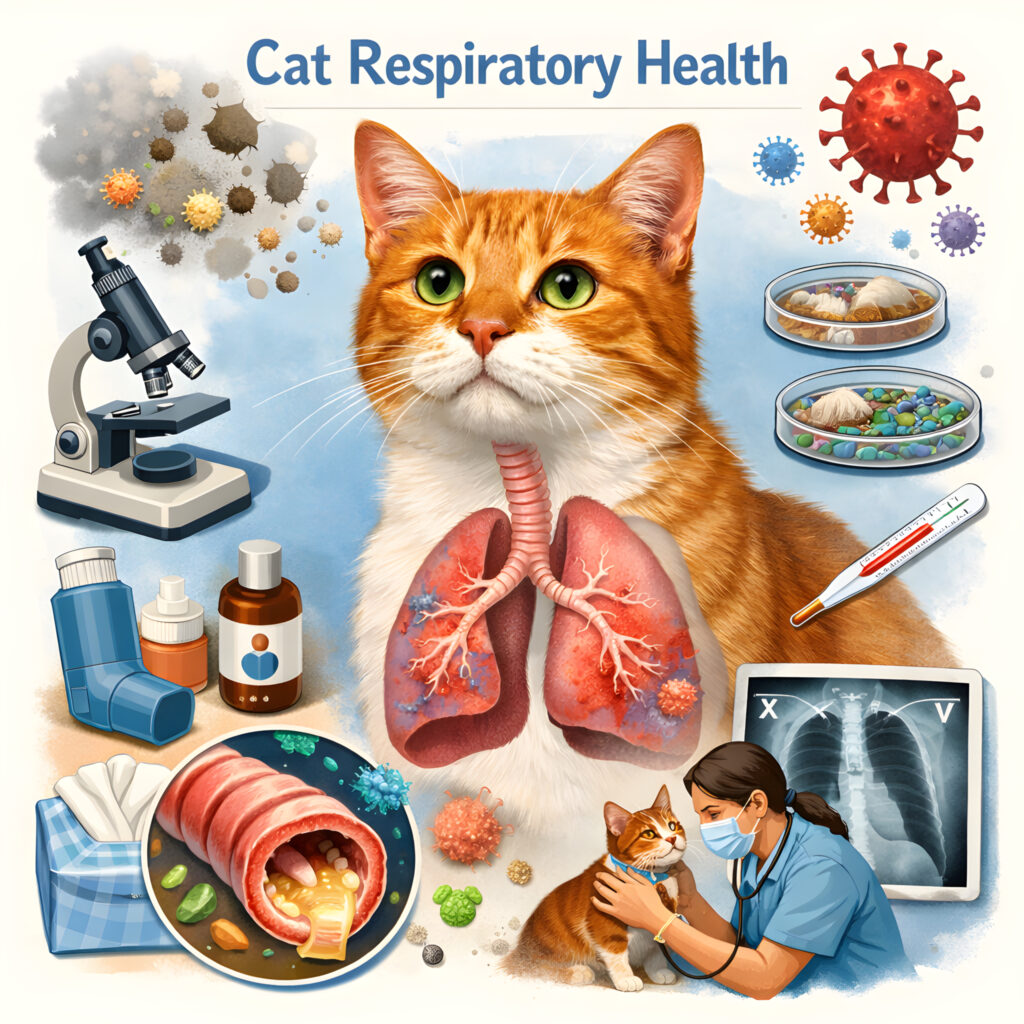
Feline Asthma is one of the most well-documented respiratory conditions in cats, affecting an estimated one to five percent of the domestic cat population. It is characterized by chronic inflammation of the airways and can cause wheezing, coughing, labored breathing, and in severe cases, life-threatening attacks. Triggers include dust, mold spores, cigarette smoke, and chemical aerosols. Many of these triggers originate within HVAC systems that have not been properly maintained.
Chronic Upper Respiratory Infections can also be aggravated by poor air quality. While viral or bacterial infections are the primary cause, a cat whose immune and respiratory systems are constantly battling airborne irritants is more susceptible to getting sick and slower to recover.
Rhinitis and Sinusitis in cats, which involve inflammation of the nasal passages and sinuses, are often triggered or worsened by persistent exposure to dust, mold, and chemical irritants. Symptoms include sneezing, nasal discharge, and congestion. If your cat seems permanently stuffy or sneezes frequently without an obvious infection, your indoor air quality is worth evaluating.
Skin and Eye Irritation can accompany respiratory symptoms, since many of the same airborne particles that irritate airways also affect mucous membranes and skin. Watery eyes, excessive scratching, and skin inflammation can all signal that something in the air is causing problems.
How Your HVAC System Can Be the Problem or the Solution
The HVAC system in your home is not inherently good or bad for your cat. Its impact depends entirely on how well it is maintained and what components are in place. Think of it as a tool: used correctly, it is one of the best investments you can make in your indoor environment; neglected, it actively works against the health of everyone inside, including your pets.
Filters are the front line of defense. Your HVAC filter captures particles before they circulate through your home. A standard fiberglass filter catches larger particles but allows smaller, more harmful ones to pass right through. For a home with cats, upgrading to a HEPA-rated or high MERV filter makes a meaningful difference. These filters can capture pet dander, mold spores, dust mite debris, and fine particulate matter that lower-quality filters miss entirely. The catch is that higher-quality filters need to be changed more frequently, roughly every one to two months in a home with pets, rather than the standard three-month recommendation.
Humidity control matters more than most people realize. Your HVAC system influences the moisture level in your home, and that moisture level directly affects air quality. Low humidity, particularly common during winter heating months, dries out mucous membranes in both humans and cats. This makes it harder for the respiratory system to trap and expel particles, leaving cats more vulnerable to irritants. High humidity, on the other hand, creates ideal conditions for mold and dust mite populations to thrive. Maintaining indoor humidity between 40 and 60 percent strikes the right balance. If your system does not naturally maintain this range, adding a humidifier or dehumidifier to your setup can make a significant difference.
Duct maintenance is a factor that homeowners often overlook. Over time, the ducts that carry conditioned air throughout your home accumulate dust, debris, mold, and in some cases, pest droppings. Every time your system runs, it sends air past these accumulated materials and delivers some of them into your living spaces. A professional air duct cleaning service, performed every three to five years or sooner if you notice persistent odors or visible debris, removes this buildup and improves the overall cleanliness of the air your cat breathes.
Ventilation keeps the air fresh. A well-designed HVAC system does not just recirculate indoor air; it exchanges some of that air with fresh outdoor air. Proper ventilation dilutes the concentration of indoor pollutants and prevents the buildup of carbon dioxide, chemical vapors, and biological contaminants. If your home feels stuffy or if odors linger despite cleaning, inadequate ventilation may be contributing to air quality problems that affect your cat.
Practical Steps to Protect Your Cat’s Respiratory Health
The good news is that improving your indoor air quality does not require a complete HVAC overhaul. A series of consistent, manageable habits can make a meaningful difference for your cat’s comfort and long-term health.
Start by making filter changes a scheduled habit rather than a reactive one. Set a recurring reminder on your phone or calendar and choose a filter rated MERV 11 or higher for a home with pets. Keep a spare on hand so there is no temptation to delay when the schedule arrives.
Invest in a standalone air purifier for the rooms where your cat spends the most time. Look for models with true HEPA filtration and an activated carbon layer, which helps neutralize odors and chemical vapors. Position the purifier at floor level or low in the room, since that is where your cat primarily breathes.
Be thoughtful about the products you use in your home. Many conventional cleaning sprays, air fresheners, scented candles, and fabric softeners release volatile organic compounds and fragrances that can irritate a cat’s respiratory system. Fragrance-free or naturally derived alternatives reduce the chemical load in your indoor air significantly.
Groom your cat regularly to reduce the amount of loose dander circulating in the air. Vacuum frequently using a vacuum with a HEPA filter, and consider washing soft furnishings like cat beds and blankets on a weekly basis. These habits directly reduce the particle load that your HVAC system has to manage.
Finally, schedule annual HVAC maintenance with a qualified technician. A professional tune-up includes inspecting and cleaning components like the evaporator coil, checking refrigerant levels, and testing airflow. These checks ensure your system is not only running efficiently but is also distributing clean air rather than circulating accumulated grime.
Your HVAC System Is a Pet Health Tool
Cats are quiet animals, and their discomfort is not always obvious. They may sneeze more, breathe a little harder, or seem less energetic, and owners often attribute these changes to age or minor seasonal illness. But persistent respiratory symptoms in cats frequently have a root cause that is hiding in plain sight: the air quality inside the home.
Your HVAC system is one of the most powerful tools at your disposal for protecting your cat’s respiratory health. When properly maintained, it filters irritants, regulates humidity, and keeps the air clean and consistent. When neglected, it becomes a circulation system for the very particles that compromise your cat’s lungs and immune system. The investment required to keep your HVAC system in top condition is modest compared to the veterinary bills, medications, and stress that come with managing a cat with chronic respiratory issues. More importantly, it is an investment in your cat’s da