
Ensuring Fresh Air Circulation in Rooms Where Your Cat Sleeps
If you share your home with a cat, you already know that they tend to claim the most comfortable corners for themselves.
Whether it is a sunny windowsill, a cozy bedroom nook, or a favorite armchair, cats spend a significant portion of their day, often 12 to 16 hours, sleeping and resting in enclosed spaces.
While this behavior is completely natural, it does raise an important question that many pet owners overlook: how is the air quality in those spaces?
Cats shed dander, fur, and microscopic particles constantly.
Over time, rooms where cats frequently sleep can accumulate allergens, odors, and stale air that affect both your pet’s respiratory health and your own.
Poor ventilation in a cat’s sleeping space is not just a comfort issue; it is a genuine health concern.
The good news is that maintaining fresh, clean air circulation in your cat’s favorite spots does not require expensive renovations or complicated systems.
With a thoughtful approach and a few consistent habits, you can create a healthier breathing environment for everyone in your household.
This article walks you through the most effective strategies for ensuring proper airflow in the rooms where your cat sleeps.
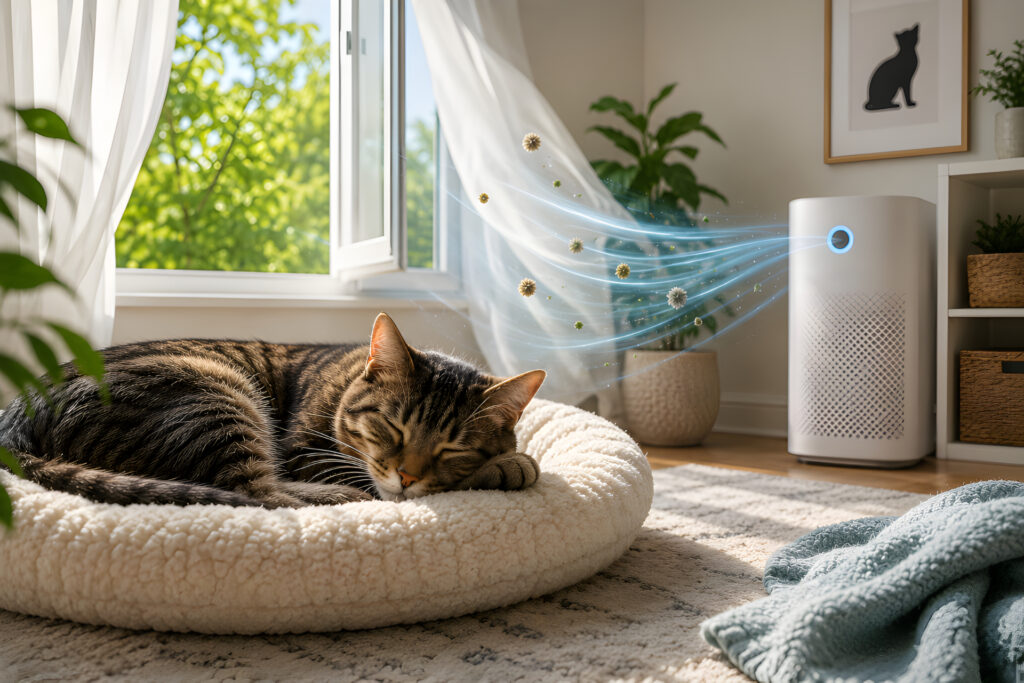
Fresh Air Circulation
Why Air Quality Matters in Your Cat’s Sleeping Spaces
Most pet owners focus on visible cleanliness, vacuuming fur, washing bedding, and wiping down surfaces. But the quality of the air itself is just as important, if not more so. Cats produce dander, which consists of tiny flakes of dried skin that become airborne and linger in low-ventilated areas for hours or even days. Combined with litter box particles, fur, and natural body oils, these elements create an invisible layer of pollutants in any room where a cat spends time.
For cats themselves, poor air quality can contribute to chronic sneezing, watery eyes, respiratory inflammation, and in some cases, more serious conditions like feline asthma. Cats are sensitive animals, and their airways respond to environmental irritants just as human airways do. A stuffy, stagnant room that smells fine to you might still carry elevated levels of allergens that irritate your pet’s lungs over time.
For humans, especially those with allergies or asthma, rooms where cats sleep can become problematic even after the cat has left the space. Cat allergens are notoriously sticky, clinging to walls, furniture, curtains, and carpets. Without active ventilation, these particles recirculate through the room air repeatedly, keeping allergy sufferers uncomfortable and increasing exposure risks.
Understanding why air quality matters is the first step toward fixing it. Once you recognize that the air in your cat’s sleeping room is a living part of your home environment, rather than something passive in the background, you can take meaningful steps to improve it.
Practical Ventilation Strategies for Cat-Friendly Rooms
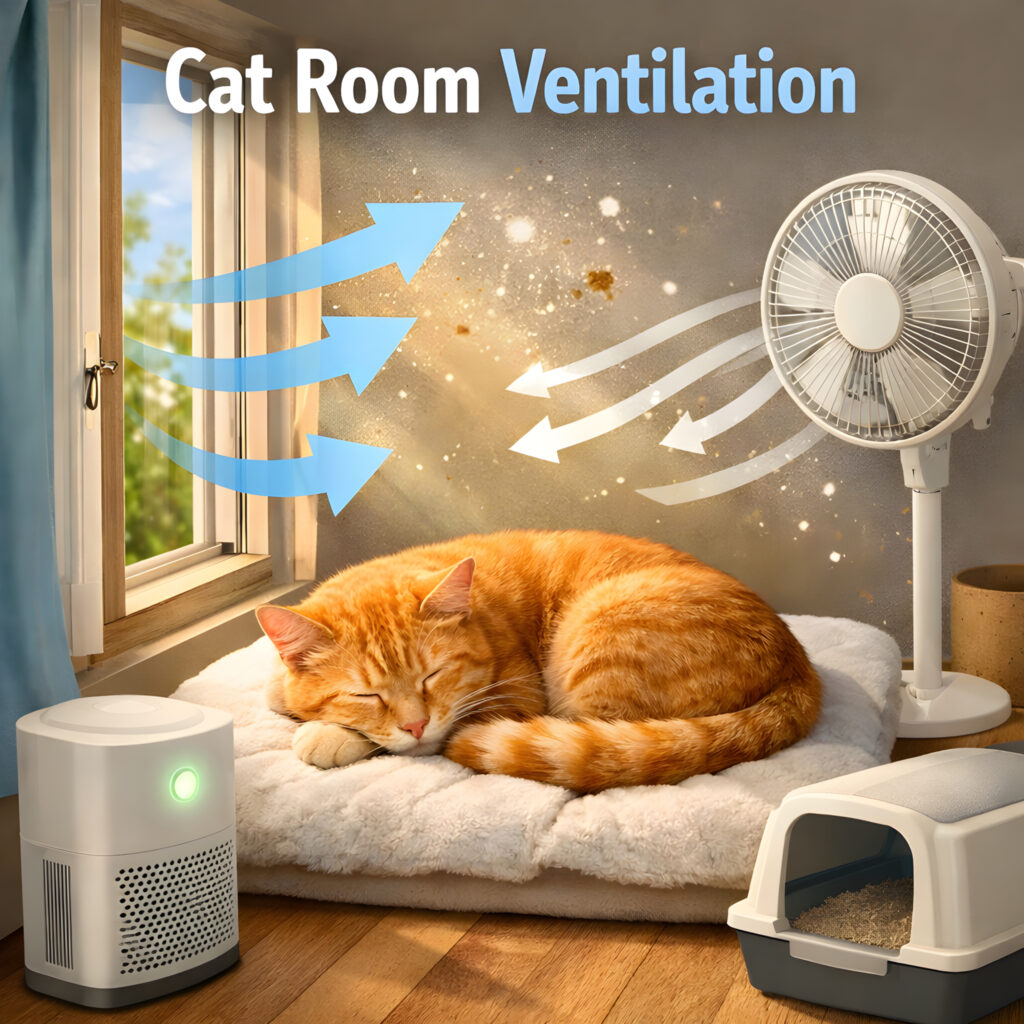
The most direct way to improve air circulation is to increase the movement of fresh air through your cat’s sleeping spaces. Natural ventilation is your simplest and most cost-effective tool. Opening windows on opposite sides of a room, even for just 15 to 20 minutes a day, creates a cross-ventilation effect that pushes stale, allergen-heavy air out and draws in fresh air from outside.
If your home layout makes cross-ventilation difficult, positioning a small box fan near an open window can significantly accelerate air exchange. Fans do not purify air on their own, but they break up the stagnant pockets that allow dander and odors to accumulate near the floor and in corners where cats tend to sleep.
For rooms that cannot be ventilated easily through windows, such as interior bedrooms or basement spaces, a dedicated air purifier with a HEPA filter is one of the most effective investments you can make. HEPA filters capture particles as small as 0.3 microns, which covers the size range of most cat dander and fine allergens. Running an air purifier continuously in the room where your cat sleeps ensures that the air is consistently cycled and cleaned, reducing the buildup of airborne irritants throughout the day and night.
It is also worth evaluating your home’s HVAC system. If your home uses central heating and cooling, the ducts and filters play a large role in overall air quality. A clogged or dirty filter will push recirculated allergen-laden air back through every room in the house. Replacing HVAC filters regularly, ideally every one to three months, especially in pet-heavy households, makes a measurable difference. For homes with heavy pet traffic, one consultation with air duct cleaners can address the deeper buildup that regular filter changes cannot reach on their own.
Managing the Sources of Air Pollution in Cat Sleeping Areas
Improving ventilation works best when combined with reducing the sources of pollutants at the same time. Cat bedding, blankets, and soft sleeping surfaces accumulate dander, oils, and odors quickly. Washing these items at least once a week in hot water removes trapped particles and prevents the slow release of allergens into the surrounding air.
The placement of the litter box deserves particular attention. Many cat owners keep the litter box in the same room or adjacent to where their cat sleeps, which concentrates ammonia fumes, dust, and odor particles in one area. If possible, situate the litter box in a well-ventilated space, ideally with its own exhaust fan or near an exterior wall. Covered litter boxes with built-in filters can help contain particles, but they still require regular cleaning and ventilation to prevent airborne buildup.
Grooming your cat consistently is another underrated step. Regular brushing dramatically reduces the amount of loose fur and dander shed into the air and onto sleeping surfaces. Most short-haired cats benefit from brushing two to three times per week, while long-haired breeds may need daily attention. Grooming outdoors or in a well-ventilated area keeps the released particles from settling back into your cat’s favorite sleeping spot.
Vacuuming with a HEPA-equipped vacuum cleaner, rather than a standard model, helps capture the fine particles that would otherwise become airborne during cleaning. Focus on the areas immediately around your cat’s sleeping spots, including underneath furniture and along baseboards, where particles tend to collect undisturbed.
Creating a Long-Term Routine for Healthy Air Circulation
Improving air quality is not a one-time project. It requires a consistent routine that becomes as natural as feeding your cat or cleaning the litter box. The key is to build simple habits that address both ventilation and source control on a regular schedule.
A practical weekly routine might include opening windows daily for at least 15 minutes, washing cat bedding once a week, vacuuming sleeping areas every two to three days, and changing HVAC filters monthly if you have multiple pets. Running an air purifier around the clock in the primary room where your cat sleeps turns air quality maintenance into a passive, automatic process that works even when you are not actively managing it.
Seasonally, it helps to do a more thorough check of your home’s ventilation points. During winter months, when windows stay closed and heating systems run constantly, indoor air quality tends to decline more rapidly. Adding a humidifier can prevent the dry air that makes dander and dust particles lighter and more likely to stay suspended. In summer, making use of natural breezes and keeping fans running reduces the reliance on recirculated HVAC air.
Paying attention to your cat’s behavior also provides useful feedback. Cats that sneeze frequently, have red or watery eyes, or seem reluctant to sleep in their usual spots may be responding to poor air quality before you notice any other signs. These behavioral cues are worth taking seriously and investigating before they develop into more significant health issues.
Conclusion
Fresh air circulation in your cat’s sleeping spaces is one of the simplest and most impactful changes you can make for the long-term health of both your pet and your household. By combining regular ventilation, source control through grooming and cleaning, and strategic use of air purifiers and proper HVAC maintenance, you can transform even a small, enclosed room into a genuinely healthy space for your cat to rest.
You do not need to overhaul your entire home to see results. Start with what is most accessible, open a window, wash the bedding, and check your air filter. Then build outward from there as your routine solidifies.