
Helping Your Cat Stay Calm
For first-time cat owners, adopters, and caregivers balancing work, kids, and a busy home, big shifts can quietly shake a cat’s sense of safety.
Moves, new babies, new roommates, travel, schedule changes, or other household transitions often cause pet routine disruption, and cats may show it through clinginess, hiding, irritability, or changes in appetite and litter box habits.
The hard part is that cat owners are often focused on the human to-do list while the emotional well-being of cats slips off track in the background.
Recognizing how life changes impact on pets helps keep small stress from becoming a lasting problem.

Helping Your Cat Stay Calm and Happy Through Life’s Big Changes
How Changes Disrupt a Cat’s Emotional Balance
Cats feel safest when their world is predictable. When feeding times shift, rooms smell different, or people come and go, their emotional stability can wobble, even if nothing is “wrong.” Those behavior changes are communication, not spite: your cat is saying, “I’m unsure, and I need this to make sense again.”
This matters because stress often shows up in everyday care tasks first. A worried cat may eat too fast, skip meals, refuse water, or avoid the litter box, which can look like stubbornness. Spotting triggers early helps you respond with support instead of constant trial-and-error.
Think of a move or remodel like suddenly rearranging your cat’s map of home. Even though cats can adapt, they may hide, guard doorways, or cling until new routines feel reliable. Small cues like pacing near the food bowl or lingering by the carrier can be their first “check engine” light.
7 Practical Ways to Support Your Cat Through Transitions
Big changes can scramble a cat’s sense of safety, especially when their routines, territory, or favorite people shift. These practical steps help reduce stress signals and build predictability, so your cat can settle sooner.
- Keep the “non‑negotiables” the same: Choose 2–3 routines to protect no matter what’s changing: feeding times, litter box location (at least at first), and a consistent bedtime check-in. Predictable basics help because many stress behaviors are really “something feels different” messages. If you must change a routine, do it gradually over 7–14 days rather than all at once.
- Set up a safe room before the change hits: Pick one quiet room and stock it with food, water, a litter box, a bed, and a hiding option like a covered cat cave or a box on its side. Add familiar-smelling items, unwashed bedding, a worn T-shirt, so the room “reads” like home. This gives your cat a control zone when the rest of the house feels unpredictable.
- Use scent as your secret weapon: Cats navigate change through smell, so keep favorite blankets, scratching posts, and beds in rotation during moves, renovations, or new roommates. When introducing a new item (like a new couch or baby gear), place a familiar blanket nearby for a few days. If your cat rubs their cheeks on objects, let that happen, those scent marks are a natural calming tool.
- Build calm enrichment into the day: Add short, repeatable activities that lower stress and burn nervous energy: two 5–10 minute play sessions daily with a wand toy, followed by a small meal or treat to mimic “hunt, eat, rest.” Rotate enrichment so it stays interesting, one day a paper bag and a kicker toy, the next day a window perch and a puzzle feeder. This kind of environmental enrichment for cats helps replace anxious pacing or nighttime zoomies with healthier routines.
- Make introductions slow and scripted: Whether it’s a new pet, partner, or visiting relatives, start with separation and scent swapping (trade blankets), then brief visual access through a cracked door or baby gate, and only then supervised time together. Keep early sessions short, 1–3 minutes, and end on a calm note before anyone gets overwhelmed. Going slower prevents your cat from learning “new thing = scary thing.”
- Create “yes” zones for scratching, climbing, and hiding: Stress often shows up as scratching furniture, knocking items over, or disappearing under beds. Give legal outlets in the areas your cat already chooses: a tall scratcher near the couch, a cardboard scratch pad by the bedroom door, a cat tree or shelf near a window, and at least one hide spot per main room. Community-cat caretakers have seen stability improve with consistent environmental support, and stable colonies are a reminder that steady resources and safe spaces matter.
- Track changes like a detective, and know when to call the vet: Write down daily notes for one week: appetite, litter box output, sleep, play, hiding, and any new vocalizing or aggression. Patterns make it easier to spot a true stress response versus a medical issue, especially if you see vomiting, diarrhea, straining, or not eating for 24 hours. Bringing simple notes to your appointment helps your vet (and you) choose the right support plan.
Common Questions About Cats and Major Life Changes
How can moving to a new home affect my cat’s behavior and well-being?

A new home can trigger hiding, clinginess, litter box changes, or appetite dips because your cat has lost access to the familiar scents. Keep meals and playtime on the same schedule, and start with one calm basecamp room until eating and toileting look normal. Jot down daily notes for a week so you can spot patterns and share specifics with your vet if needed.
What are the best ways to maintain my cat’s feeding routine during changes in my work schedule?

Pick two feeding times you can protect most days, then build a simple backup plan for late shifts, such as a pre-portioned meal set out right before you leave. Add a short play session before dinner to help your cat settle. If your cat starts crying, pacing, or overeating, treat it as a signal to tighten consistency, not as “bad behavior.”
How might welcoming a new baby disrupt my cat’s sense of security and daily habits?

New sounds, smells, and traffic can make your cat feel displaced, so keep your cat’s key resources in quiet areas and preserve one daily “you and me” ritual. Introduce baby items gradually and reward calm investigation with attention or a tiny snack. If your cat begins to avoid the family or becomes vocal at night, track timing and triggers so you can adjust the routine early.
What strategies can help reduce stress for my cat when household dynamics shift unexpectedly?

Prioritize predictable basics: same feeding place, clean litter, and short daily interaction at set times. Watch for separation-related behaviors since 61% of pet owners report separation anxiety as their top behavioral concern. Create a support plan by assigning one person to check food, water, litter, and play each day, even during chaos.
If I’m feeling overwhelmed by life changes and need more structure, how can I balance caring for my cat while managing these transitions?
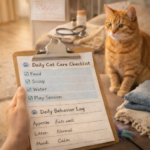
Shrink care to a doable checklist: feed, scoop, refresh water, and one short play session, then add extras only when you can. Use a simple behavior log because ecological validity matters when you are judging your cat’s true baseline at home. If your household now includes health or caregiving responsibilities, consider a family-focused training path to share tasks safely and consistently, and click here to see a structured program outline.
Quick Calm-and-Comfort Checklist
This checklist turns stress into simple steps you can follow even on busy, emotional days. Use it to protect your cat’s feeding and care basics while you watch for early clues that they need extra support.
✔ Set protected meal times and pre-portion a backup meal
✔ Keep food, water, and litter in the same quiet locations
✔ Create one safe room with bed, hiding spot, and scratching surface
✔ Run a 5-minute play session before the main meal
✔ Track appetite, litter use, and sleep changes for seven days
✔ Offer enrichment daily: puzzle feeder, window perch, or paper bag
✔ Schedule a vet call if changes last over 48 hours
Small steps, repeated daily, rebuild your cat’s confidence fast.
Build a Calm Cat Life by Anchoring One Daily Routine
Big changes like moving, new people, or schedule shifts can leave cats feeling unsettled even when the home is loving and safe. The steadier path is proactive pet care that focuses on reinforcing stable routines and protecting the small, predictable parts of your cat’s day. When consistency for pets becomes the default, stress signals are easier to spot, comfort comes faster, and owner confidence in pet management grows with each calm week.
Consistency is the fastest way to make a new situation feel safe. Choose one routine to keep the same starting today, mealtime, playtime, or a quiet check-in, and hold it steady through the transition. That simple anchor supports long-term pet well-being during transitions and makes future changes easier for everyone.